Paul’s last chapter brings the whole argument down to ground level. Chapter 5 said the Spirit-led life bears fruit; chapter 6 shows what that looks like in a real congregation — restoring a brother who has fallen, carrying one another’s loads, sowing with an eye on the harvest. Then Paul takes the pen from his scribe, writes his closing lines in his own large hand, and sums up everything he has argued in one sentence: God forbid that I should glory, save in the cross.
A study in Galatians 6 · Arthur Baldwin · StandUp4Jesus.Org · 22 min read
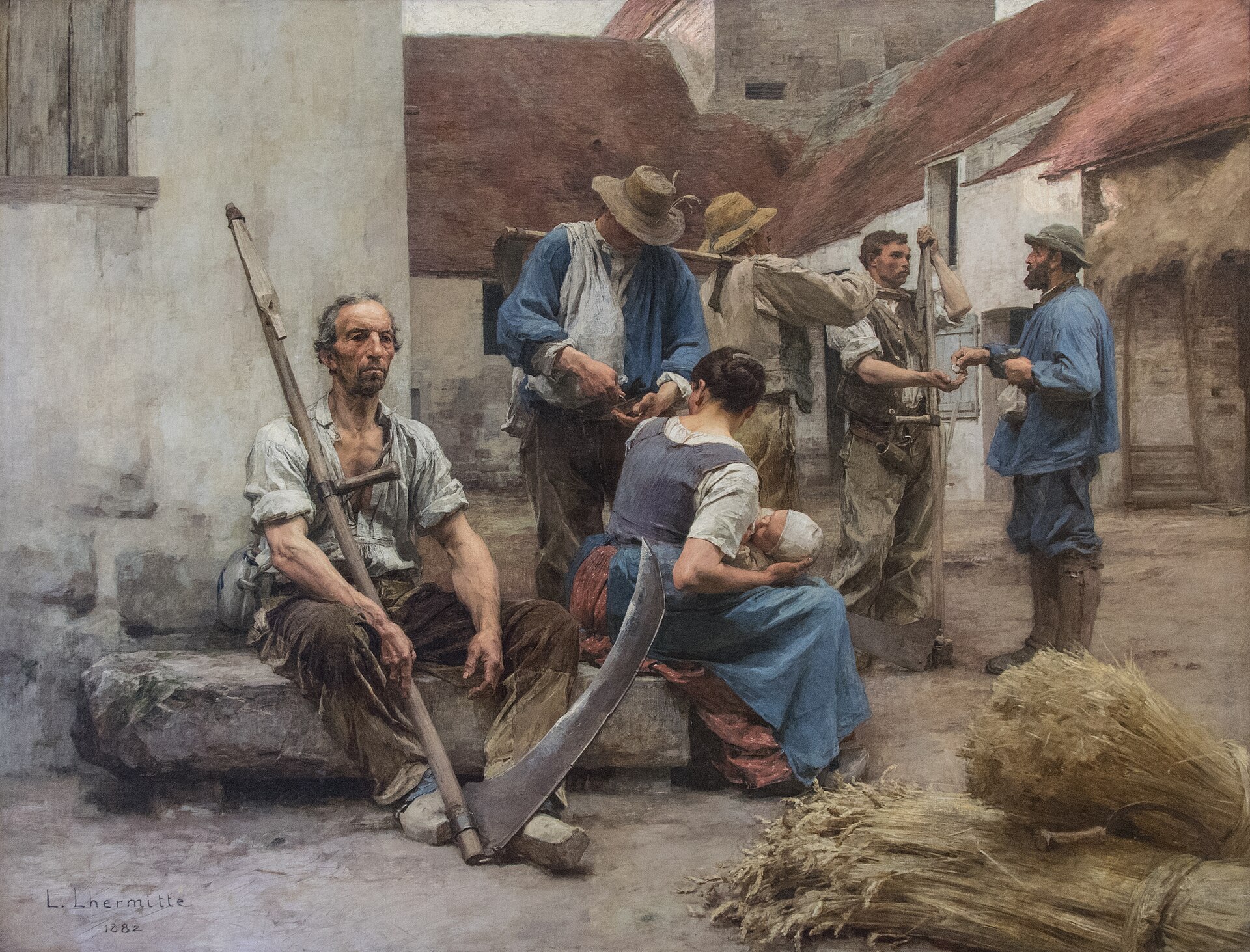
Bear Ye One Another’s Burdens
“Brethren, if a man be overtaken in a fault, ye which are spiritual, restore such an one in the spirit of meekness; considering thyself, lest thou also be tempted.”
Galatians 6:1
The chapter opens with the first practical test of everything chapter 5 said about walking in the Spirit. “Overtaken” pictures someone caught off guard rather than a calculated rebel, and the word for “restore” was used for setting a broken bone or mending a torn net. The goal is never exposure or punishment but repair. And the qualification Paul sets for doing it is not seniority but spirituality — the very meekness he has just named among the fruit of the Spirit.
“Do not put him to shame by exposing his fault to others, nor bring dishonor upon Christ by making public the sin or error of one who bears His name. Often the truth must be plainly spoken to the erring; he must be led to see his error, that he may reform. But you are not to judge or to condemn. Make no attempt at self-justification. Let all your effort be for his recovery. In treating the wounds of the soul, there is need of the most delicate touch, the finest sensibility. Only the love that flows from the Suffering One of Calvary can avail here.”
Ellen G. White · The Desire of Ages, p. 440
“Considering thyself” is the safeguard. Whoever sets out to restore a fallen brother is standing, for that moment, in the very place where the fall happened. The one who forgets that is already in danger.
“Bear ye one another’s burdens, and so fulfil the law of Christ.”
Galatians 6:2
There is a quiet irony here. The Galatians had wanted to take up the burden of the law of Moses as a way to be justified; Paul hands them a different burden entirely — each other. “The law of Christ” is not a new law replacing the old but the same law chapter 5 said is “fulfilled in one word,” love for one’s neighbour, now seen in the life of the One who carried everyone’s load to the cross.
“For if a man think himself to be something, when he is nothing, he deceiveth himself. But let every man prove his own work, and then shall he have rejoicing in himself alone, and not in another. For every man shall bear his own burden.”
Galatians 6:3-5
“He who considers himself superior in judgment and experience to his brethren and despises their counsel and admonition, evinces that he is in a dangerous delusion. The heart is deceitful. He should test his character and life by the Bible standard. … Every man must at last stand or fall for himself, not according to the opinion of the party that sustains or opposes him, not according to the judgment of any man, but according to his real character in the sight of God.”
Ellen G. White · Testimonies for the Church, vol. 5, p. 247
Verses 2 and 5 only look like a contradiction. Two different words stand behind “burden”: the first is a crushing weight too heavy for one person, which love helps carry; the second is a soldier’s or traveller’s own pack, the ordinary personal load of responsibility that no one else can carry for us before God. The church shares the crushing weights. It cannot take over anyone’s accountability.
“Let him that is taught in the word communicate unto him that teacheth in all good things.”
Galatians 6:6
“Communicate” here means to share — those who receive the word are to share their material goods with those who teach it. It is a practical instance of burden-bearing, and it leads directly into the harvest principle that follows.
Whatsoever A Man Soweth
“Be not deceived; God is not mocked: for whatsoever a man soweth, that shall he also reap. For he that soweth to his flesh shall of the flesh reap corruption; but he that soweth to the Spirit shall of the Spirit reap life everlasting.”
Galatians 6:7-8
“Every seed sown produces a harvest of its kind. So it is in human life. We all need to sow the seeds of compassion, sympathy, and love; for we shall reap what we sow. Every characteristic of selfishness, self-love, self-esteem, every act of self-indulgence, will bring forth a like harvest. He who lives for self is sowing to the flesh, and of the flesh he will reap corruption. God destroys no man. Everyone who is destroyed will have destroyed himself.”
Ellen G. White · Christ’s Object Lessons, p. 84
“Mocked” literally means to turn up one’s nose at someone — to treat God as though He could be fooled. The law of the harvest is not an arbitrary penalty but the way God’s world works: what grows is what was planted. This study’s source draws the sobering conclusion that the final loss of the lost is not God’s cruelty but their own harvest. The same principle, read from the other side, is the believer’s hope: seed sown to the Spirit also comes up, and its crop is life everlasting.
“And let us not be weary in well doing: for in due season we shall reap, if we faint not.”
Galatians 6:9
“In this life our work for God often seems to be almost fruitless. Our efforts to do good may be earnest and persevering, yet we may not be permitted to witness their results. To us the effort may seem to be lost. But the Saviour assures us that our work is noted in heaven, and that the recompense cannot fail.”
Ellen G. White · Testimonies for the Church, vol. 6, p. 305
Any farmer knows the long stretch between sowing and reaping, when the field looks exactly as it did before the seed went in. Paul does not promise that well doing will be quickly rewarded, only that it will be rewarded “in due season” — God’s season, not ours. The only real danger he names is fainting before the harvest comes.
“As we have therefore opportunity, let us do good unto all men, especially unto them who are of the household of faith.”
Galatians 6:10
“In a special sense, Christ has laid upon His church the duty of caring for the needy among its own members. … As the members of a true family care for one another, ministering to the sick, supporting the weak, teaching the ignorant, training the inexperienced, so is ‘the household of faith’ to care for its needy and helpless ones.”
Ellen G. White · The Ministry of Healing, p. 201
The circle of good is drawn wide — “all men” — but it has a center. A church that neglects its own members has no credibility caring for anyone else, and a church that cares only for its own has missed the “all men” entirely. Paul holds both together.
With Mine Own Hand
“Ye see how large a letter I have written unto you with mine own hand.”
Galatians 6:11
Paul normally dictated his letters to a scribe and added only a closing line in his own writing. Here he appears to take the pen for the whole conclusion, and the Greek most naturally describes large letters — big handwriting — rather than a long letter. Whether the reason was poor eyesight (compare chapter 4’s remark that the Galatians would have given him their own eyes) or deliberate emphasis, the effect is the same as underlining: what follows is the part he most wants them not to miss.
“As many as desire to make a fair shew in the flesh, they constrain you to be circumcised; only lest they should suffer persecution for the cross of Christ. For neither they themselves who are circumcised keep the law; but desire to have you circumcised, that they may glory in your flesh.”
Galatians 6:12-13
Now Paul names the motive behind the whole campaign. The false teachers wanted a “fair shew” — a good-looking record of converts they could point to, a count of circumcised Gentiles to boast about. Circumcision also bought them safety: a gospel that made Gentiles into Jewish proselytes gave far less offense than a gospel of the cross alone. And for all their zeal for the law, they did not keep it themselves. Their religion was about appearances, and the Galatians were being used as trophies.
God Forbid That I Should Glory
“But God forbid that I should glory, save in the cross of our Lord Jesus Christ, by whom the world is crucified unto me, and I unto the world.”
Galatians 6:14
Here is the answer to the false teachers’ boasting, and to the whole letter. They gloried in the Galatians’ flesh; Paul will glory in nothing but an instrument of execution. The cross was the most shameful death the Roman world knew, and Paul makes it his only boast because it is the one place where no human achievement has any part — only Christ’s.
“Through the cross we learn that the heavenly Father loves us with a love that is infinite. Can we wonder that Paul exclaimed, ‘God forbid that I should glory, save in the cross of our Lord Jesus Christ’? … It is our privilege also to glory in the cross, our privilege to give ourselves wholly to Him who gave Himself for us.”
Ellen G. White · The Acts of the Apostles, p. 210
The second half of the verse describes a double crucifixion. The world is dead to Paul — its approval, its religious scorekeeping, its fair shew, no longer have any hold on him — and Paul is dead to the world, no longer counted among its players. This is the same crucifixion he described in chapter 2 (“I am crucified with Christ”) and in chapter 5 (“they that are Christ’s have crucified the flesh”), now reaching its widest scope.
“Praise to God and the Lamb will be in our hearts and on our lips; for pride and self-worship cannot flourish in the soul that keeps fresh in memory the scenes of Calvary. He who beholds the Saviour’s matchless love will be elevated in thought, purified in heart, transformed in character.”
Ellen G. White · The Desire of Ages, p. 661
“For in Christ Jesus neither circumcision availeth any thing, nor uncircumcision, but a new creature.”
Galatians 6:15
This is nearly word for word what Paul said in 5:6, with one change. There the thing that counted was “faith which worketh by love”; here it is “a new creature.” They are the same reality seen from two sides — faith is how the new creation is received, and love is how it shows.
“By the transforming agency of His grace, the image of God is reproduced in the disciple; he becomes a new creature. Love takes the place of hatred, and the heart receives the divine similitude.”
Ellen G. White · The Desire of Ages, p. 391
“And as many as walk according to this rule, peace be on them, and mercy, and upon the Israel of God.”
Galatians 6:16
“This rule” is the principle of verse 15, a measuring line by which to walk. The “Israel of God” has to be read in light of what the letter itself has argued: those who are of faith “are the children of Abraham” (3:7), and “if ye be Christ’s, then are ye Abraham’s seed, and heirs according to the promise” (3:29). The true Israel, in Paul’s argument, is defined by faith in Christ rather than by the mark in the flesh the false teachers were pressing — a family in which believing Jews and believing Gentiles stand together as one.
The Marks Of The Lord Jesus
“From henceforth let no man trouble me: for I bear in my body the marks of the Lord Jesus.”
Galatians 6:17
The false teachers wanted a mark in the Galatians’ flesh. Paul has marks in his own — the word is the one used for the brand burned into a slave to show whose he was. At Lystra, in the very region of Galatia, he had been stoned and dragged out of the city for dead (Acts 14:19); by the time he wrote to Corinth he had been beaten with rods three times and received the forty stripes save one five times (2 Corinthians 11:24-25). Those scars were his credentials, and they said plainly who owned him. No one who had seen them need wonder whether Paul’s gospel was the easy one.
“Brethren, the grace of our Lord Jesus Christ be with your spirit. Amen.”
Galatians 6:18
The sharpest letter Paul ever wrote ends on two words it has used from the start. It opened with “Grace be to you” (1:3), and it closes with grace. And after six chapters of rebuke, the final word before the Amen is “brethren.” Whatever the Galatians had been drawn into, Paul still counts them family — and the grace that called them in the first place is the same grace he leaves them with.
That is the whole of Galatians in miniature. From first line to last, the letter refuses to let anything stand beside grace as the ground of a sinner’s acceptance — not circumcision, not ceremony, not a record of religious achievement. Yet it never lets grace become an excuse, because the grace that justifies also crucifies the flesh, fulfils the law in love, and grows a harvest of the Spirit. Paul’s gospel is the one he boasted of on the letter’s last page: nothing but the cross of our Lord Jesus Christ.