The very persecution meant to crush this young church instead scatters it, like seed thrown by a careless hand, into every direction at once — and the gospel goes with it. This chapter follows one deacon, Philip, out of Jerusalem and into two of the strangest encounters in the whole book: a famous sorcerer who tries to buy the Holy Spirit with cash, and a foreign official who reads himself straight into faith on the side of a desert road.
A study in Acts 8 · Arthur Baldwin · StandUp4Jesus.Org · 19 min read
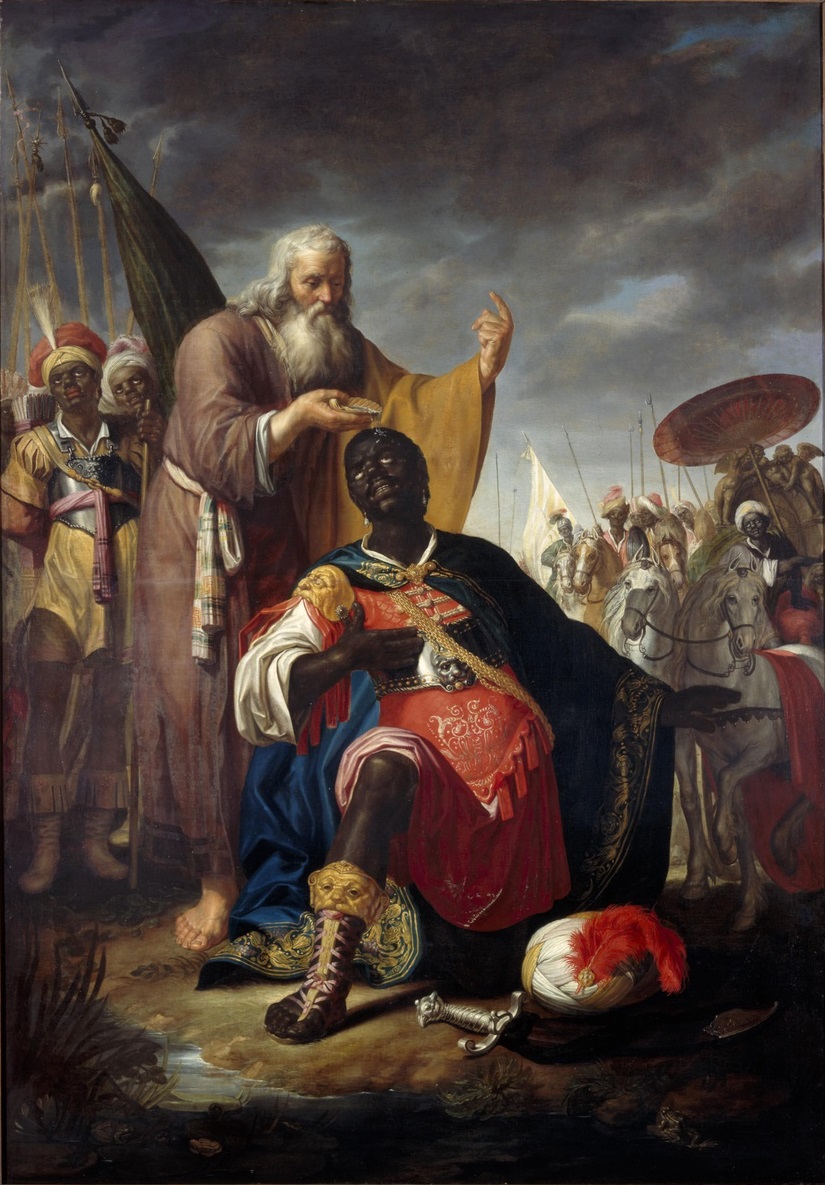
They Were All Scattered Abroad
“And Saul was consenting unto his death. And at that time there was a great persecution against the church which was at Jerusalem; and they were all scattered abroad throughout the regions of Judæa and Samaria, except the apostles. And devout men carried Stephen to his burial, and made great lamentation over him.”
Acts 8:1-2
“After the death of Stephen there arose against the believers in Jerusalem a persecution so relentless that ‘they were all scattered abroad throughout the regions of Judea and Samaria.’”
Ellen G. White · The Acts of the Apostles, p. 103
The apostles alone stay behind in Jerusalem, a small but telling detail — the very men most likely to be arrested choose to remain in the most dangerous place, while ordinary believers scatter to safety.
“As for Saul, he made havock of the church, entering into every house, and haling men and women committed them to prison. Therefore they that were scattered abroad went every where preaching the word.”
Acts 8:3-4
“The persecution that came upon the church in Jerusalem resulted in giving a great impetus to the work of the gospel. … To scatter His representatives abroad, where they could work for others, God permitted persecution to come upon them. Driven from Jerusalem, the believers ‘went everywhere preaching the word.’”
Ellen G. White · The Acts of the Apostles, p. 105
Saul’s entire campaign is designed to stamp out this new movement, and it produces the exact opposite result. A church that had been comfortable enough in Jerusalem to linger there, still mostly unmindful of Christ’s command to reach “the uttermost part of the earth,” is forced out into that very mission by the one man most determined to destroy it.
“Then Philip went down to the city of Samaria, and preached Christ unto them. And the people with one accord gave heed unto those things which Philip spake, hearing and seeing the miracles which he did. For unclean spirits, crying with loud voice, came out of many that were possessed with them: and many taken with palsies, and that were lame, were healed. And there was great joy in that city.”
Acts 8:5-8
“Philip, one of the seven deacons, was among those driven from Jerusalem. He ‘went down to the city of Samaria, and preached Christ unto them.’ … Christ’s message to the Samaritan woman with whom He had talked at Jacob’s well had borne fruit.”
Ellen G. White · The Acts of the Apostles, p. 106
A table-server chosen back in chapter 6 to distribute food to widows is now, only one chapter later, working miracles and casting out unclean spirits in a city Jewish believers had every historical reason to avoid. The seed of that one conversation Jesus had years earlier with a Samaritan woman at a well is only now, through Philip, finally coming up.
Thy Money Perish With Thee
“But there was a certain man, called Simon, which beforetime in the same city used sorcery, and bewitched the people of Samaria, giving out that himself was some great one: To whom they all gave heed, from the least to the greatest, saying, This man is the great power of God.”
Acts 8:9-10
Before Philip ever arrives, Simon already holds this entire city in the palm of his hand — not a minor local curiosity, but a man the whole population, high and low alike, has come to treat as something close to divine.
“But when they believed Philip preaching the things concerning the kingdom of God, and the name of Jesus Christ, they were baptized, both men and women. Then Simon himself believed also: and when he was baptized, he continued with Philip, and wondered, beholding the miracles and signs which were done.”
Acts 8:12-13
Even Simon himself is swept up in the excitement, baptized along with the rest of the city — and yet the text’s own choice of word is worth noticing. He does not simply believe; he “wondered,” the same reaction of a man watching an impressive performance rather than one whose heart has actually changed.
“Now when the apostles which were at Jerusalem heard that Samaria had received the word of God, they sent unto them Peter and John: Who, when they were come down, prayed for them, that they might receive the Holy Ghost: (For as yet he was fallen upon none of them: only they were baptized in the name of the Lord Jesus.) Then laid they their hands on them, and they received the Holy Ghost.”
Acts 8:14-17
Water baptism and the gift of the Spirit are, notably, two separate moments here rather than one automatic package — Philip could baptize, but the apostles themselves come down from Jerusalem specifically to pray over this new Samaritan church, the same nation Jews had despised for centuries now formally, visibly joined to the rest of the believing body.
“And when Simon saw that through laying on of the apostles’ hands the Holy Ghost was given, he offered them money, Saying, Give me also this power, that on whomsoever I lay hands, he may receive the Holy Ghost.”
Acts 8:18-19
Simon’s whole career had been built on being the man other people paid for access to spiritual power. Watching the apostles do something he cannot explain and cannot perform himself, his very first instinct is to reach for the one tool that has always worked for him before: money.
“But Peter said unto him, Thy money perish with thee, because thou hast thought that the gift of God may be purchased with money. Thou hast neither part nor lot in this matter: for thy heart is not right in the sight of God.”
Acts 8:20-21
Peter’s rebuke is as sharp as anything he says anywhere in this book. The very request exposes exactly what Simon still believes: that spiritual authority is a commodity, transferable like any other skill, rather than a gift given freely by a God who cannot be bought.
“Repent therefore of this thy wickedness, and pray God, if perhaps the thought of thine heart may be forgiven thee. For I perceive that thou art in the gall of bitterness, and in the bond of iniquity.”
Acts 8:22-23
Even now, Peter does not pronounce Simon beyond hope. “If perhaps” leaves the door open; the harshness of the diagnosis is matched by a real offer of forgiveness, on the one condition Simon has not yet shown any sign of meeting: genuine repentance rather than mere alarm.
“Then answered Simon, and said, Pray ye to the Lord for me, that none of these things which ye have spoken come upon me.”
Acts 8:24
It is a telling final answer. Simon asks Peter to pray for him, but never once prays for himself; he wants the consequences removed, but the text records no actual repentance from him — only fear of the punishment, a fear that looks like conviction without ever quite becoming it. His own name would go on to give the future church a permanent word for this exact sin: simony, the buying and selling of sacred office.
Understandest Thou What Thou Readest?
“And the angel of the Lord spake unto Philip, saying, Arise, and go toward the south unto the way that goeth down from Jerusalem unto Gaza, which is desert.”
Acts 8:26
“While Philip was still in Samaria, he was directed by a heavenly messenger to ‘go toward the south unto the way that goeth down from Jerusalem unto Gaza.’ … He did not question the call, nor did he hesitate to obey; for he had learned the lesson of conformity to God’s will.”
Ellen G. White · The Acts of the Apostles, p. 107
Philip is pulled away from the middle of a thriving, joyful ministry, with no explanation offered for why, toward a stretch of empty desert road that promises nothing at all in the way of a crowd.
“And he arose and went: and, behold, a man of Ethiopia, an eunuch of great authority under Candace queen of the Ethiopians, who had the charge of all her treasure, and had come to Jerusalem for to worship, Was returning, and sitting in his chariot read Esaias the prophet.”
Acts 8:27-28
“This Ethiopian was a man of good standing and of wide influence. God saw that when converted he would give others the light he had received and would exert a strong influence in favor of the gospel. Angels of God were attending this seeker for light, and he was being drawn to the Saviour.”
Ellen G. White · The Acts of the Apostles, p. 107
A man in charge of an entire royal treasury is reading Scripture alone in his chariot on the road home, hundreds of miles from Jerusalem’s temple he had just traveled so far to visit — a genuinely hungry seeker, already primed by heaven for exactly this meeting before Philip ever arrives.
“Then the Spirit said unto Philip, Go near, and join thyself to this chariot. And Philip ran thither to him, and heard him read the prophet Esaias, and said, Understandest thou what thou readest? And he said, How can I, except some man should guide me? And he desired Philip that he would come up and sit with him.”
Acts 8:29-31
Philip does not simply walk toward the chariot; he runs. This is the same urgency that earlier obeyed a strange instruction to leave a fruitful city for an empty road, now aimed at the one man that whole detour turns out to have been for.
“The place of the scripture which he read was this, He was led as a sheep to the slaughter; and like a lamb dumb before his shearer, so opened he not his mouth: In his humiliation his judgment was taken away: and who shall declare his generation? for his life is taken from the earth.”
Acts 8:32-33
“And the eunuch answered Philip, and said, I pray thee, of whom speaketh the prophet this? of himself, or of some other man? Then Philip opened his mouth, and began at the same scripture, and preached unto him Jesus.”
Acts 8:34-35
“The man’s heart thrilled with interest as the Scriptures were explained to him; and when the disciple had finished, he was ready to accept the light given. He did not make his high worldly position an excuse for refusing the gospel.”
Ellen G. White · The Acts of the Apostles, p. 108
Of all the passages the eunuch could have happened to be reading that day, it is Isaiah 53 — the clearest Messianic prophecy of suffering in the entire Old Testament, and precisely the text an itinerant preacher needs to explain nothing about Jesus except who this suffering figure already, unmistakably, is.
He Went On His Way Rejoicing
“And as they went on their way, they came unto a certain water: and the eunuch said, See, here is water; what doth hinder me to be baptized? And Philip said, If thou believest with all thine heart, thou mayest. And he answered and said, I believe that Jesus Christ is the Son of God.”
Acts 8:36-37
In the middle of a desert, water appears at the exact moment it is needed — a small providence easy to miss, quietly matching the whole chapter’s pattern of God arranging every detail of this one meeting in advance.
“And he commanded the chariot to stand still: and they went down both into the water, both Philip and the eunuch; and he baptized him.”
Acts 8:38
“And when they were come up out of the water, the Spirit of the Lord caught away Philip, that the eunuch saw him no more: and he went on his way rejoicing.”
Acts 8:39
Philip vanishes from the story mid-sentence, without a farewell or a final word of instruction — and it does not matter in the least. The eunuch’s joy is not dependent on Philip’s continued presence; it belongs entirely to what he has just believed, and it travels with him back to Ethiopia whether or not the preacher who led him there is still standing beside the chariot.
“But Philip was found at Azotus: and passing through he preached in all the cities, till he came to Cæsarea.”
Acts 8:40
“This Ethiopian represented a large class who need to be taught by such missionaries as Philip—men who will hear the voice of God and go where He sends them. … The angel sent to Philip could himself have done the work for the Ethiopian, but this is not God’s way of working. It is His plan that men are to work for their fellow men.”
Ellen G. White · The Acts of the Apostles, p. 109
An angel could have explained Isaiah 53 to the eunuch directly, in an instant, with no detour, no chariot, and no runner needed. God’s own chosen method is slower and far more roundabout than that — a real man, willing to leave a successful ministry behind on a moment’s notice, walking the actual dusty distance to sit beside a stranger and answer one honest question.