Fourteen chapters have corrected divisions, discipline, marriage, meat, worship, and gifts. Chapter 15 turns to something none of the others touched directly: whether the dead will actually rise at all. Some in Corinth, apparently influenced by Greek philosophy’s own discomfort with a resurrected body, had begun denying it outright. Paul’s answer is the longest sustained argument in this entire letter, building from the historical evidence for Christ’s own resurrection to a vision of the last trumpet, ending in the single most quoted shout of victory in the whole New Testament.
A study in 1 Corinthians 15 · Arthur Baldwin · StandUp4Jesus.Org · 22 min read
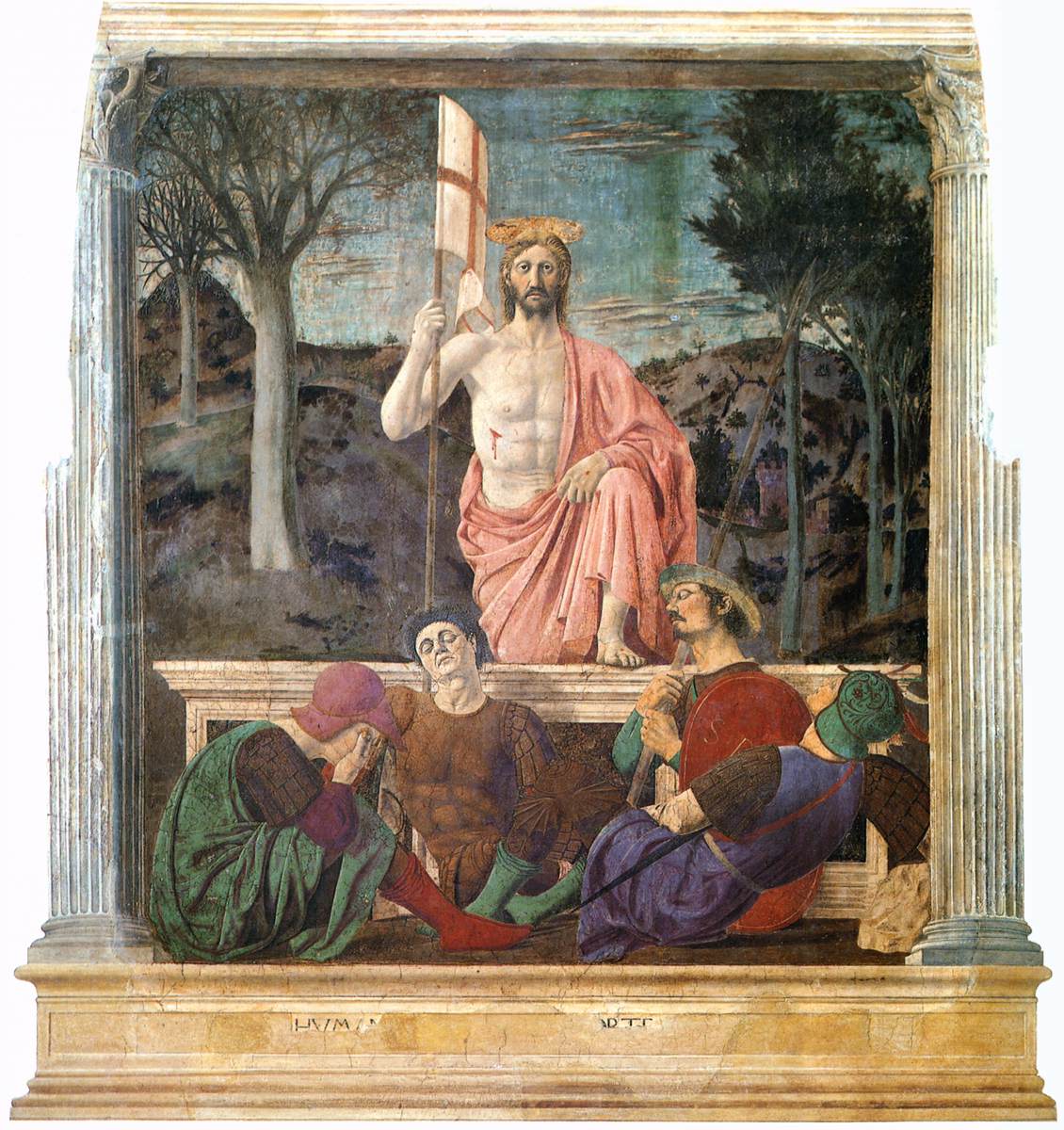
Christ Died For Our Sins, And Rose Again
“For I delivered unto you first of all that which I also received, how that Christ died for our sins according to the scriptures; And that he was buried, and that he rose again the third day according to the scriptures.”
1 Corinthians 15:3-4
“Delivered… that which I also received” identifies this as a handed-down summary older than Paul’s own letter, almost certainly a very early creed already circulating within just a few years of the crucifixion. Every clause is anchored to Scripture — not a novel claim, but the fulfillment of what had already been written.
“And that he was seen of Cephas, then of the twelve: After that, he was seen of above five hundred brethren at once; of whom the greater part remain unto this present, but some are fallen asleep.”
1 Corinthians 15:5-6
Naming over five hundred living witnesses, most still alive at the time of writing, functions as an open invitation: any skeptical reader could, in principle, go find and question them directly. This is not the language of a legend gradually inflated over time, but of a public claim made while eyewitnesses could still be cross-examined.
“After that, he was seen of James; then of all the apostles. And last of all he was seen of me also, as of one born out of due time.”
1 Corinthians 15:7-8
“Boldly he declared Jesus of Nazareth to be the long-looked-for Messiah, who ‘died for our sins according to the Scriptures; … was buried, and … rose again the third day,’ after which He was seen by the Twelve and by others. ‘And last of all,’ Paul added, ‘He was seen of me also, as of one born out of due time.’”
Ellen G. White · The Acts of the Apostles, p. 123
Paul places his own Damascus-road encounter on the very same list as the appearances to Peter, James, and the Twelve — a genuinely late, unusual appearance (“born out of due time”), but a real one, of the same kind and to the same risen Christ. This study’s own source frames the whole list as part of the message Paul carried directly to the Damascus synagogues almost immediately after his own conversion.
“For I am the least of the apostles, that am not meet to be called an apostle, because I persecuted the church of God. But by the grace of God I am what I am: and his grace which was bestowed upon me was not in vain; but I laboured more abundantly than they all: yet not I, but the grace of God which was with me.”
1 Corinthians 15:9-10
“Not I, but the grace of God” corrects the sentence’s own momentum right where it might tip into boasting — Paul names his own extraordinary labor and immediately reassigns the credit for it. This is the same humility chapter 3 already asked every believer to apply to their own ministry.
“Now if Christ be preached that he rose from the dead, how say some among you that there is no resurrection of the dead? But if there be no resurrection of the dead, then is Christ not risen.”
1 Corinthians 15:12-13
Paul finally names the actual controversy behind this whole chapter — some in Corinth, likely shaped by Greek philosophy’s own discomfort with a physical resurrection, were denying that the dead rise at all, apparently without realizing the logic cuts both ways. Deny the general resurrection, Paul points out immediately, and Christ’s own resurrection falls with it.
“And if Christ be not risen, then is our preaching vain, and your faith is also vain. … And if Christ be not raised, your faith is vain; ye are yet in your sins.”
1 Corinthians 15:14, 17
“Ye are yet in your sins” names the real stakes underneath what might otherwise sound like an abstract philosophical dispute. If the resurrection is false, this is not a minor doctrinal loss; it means the entire basis of forgiveness the Corinthians have been resting on for years never actually held.
“Then they also which are fallen asleep in Christ are perished. If in this life only we have hope in Christ, we are of all men most miserable.”
1 Corinthians 15:18-19
“The fact that David remains in the grave until the resurrection proves that the righteous do not go to heaven at death. It is only through the resurrection, and by virtue of the fact that Christ has risen, that David can at last sit at the right hand of God. And said Paul: ‘If the dead rise not, then is not Christ raised: and if Christ be not raised, your faith is vain; ye are yet in your sins. Then they also which are fallen asleep in Christ are perished.’”
Ellen G. White · The Great Controversy, p. 546
This verse carries real weight for a specific question this study’s own source addresses at length: what actually happens to believers between death and the resurrection. If the righteous dead were already consciously enjoying heaven the moment they died, this study’s own source reasons, Paul’s own word “perished” would make no sense — there would be nothing left for a future resurrection to accomplish. The hope of every believer who has died in Christ, on this reading, is tied directly and entirely to a future bodily resurrection, not to an already-completed transfer to heaven at the moment of death.
The Last Enemy That Shall Be Destroyed Is Death
“But now is Christ risen from the dead, and become the firstfruits of them that slept. For since by man came death, by man came also the resurrection of the dead. For as in Adam all die, even so in Christ shall all be made alive.”
1 Corinthians 15:20-22
“Firstfruits” draws directly on the Old Testament wave-sheaf offering — the first ripe portion of the harvest, presented to God as the guarantee that the rest of the crop will follow. Christ’s own resurrection functions the same way here: not an isolated miracle, but the first installment of a harvest still to come, on the very timeline the ancient ritual itself once foreshadowed.
“But every man in his own order: Christ the firstfruits; afterward they that are Christ’s at his coming. Then cometh the end, when he shall have delivered up the kingdom to God, even the Father.”
1 Corinthians 15:23-24
“At his coming” ties the general resurrection to a specific, still-future event, not something that has already happened privately to each believer at death. Paul’s own timeline has an order: Christ first, then, at a definite future coming, everyone who belongs to Him.
“For he must reign, till he hath put all enemies under his feet. The last enemy that shall be destroyed is death.”
1 Corinthians 15:25-26
Death is named here as an enemy, not a natural, neutral part of God’s original design — something to be actively destroyed, last in a whole sequence of defeated powers, rather than quietly accepted as simply how things have always had to be.
“I protest by your rejoicing which I have in Christ Jesus our Lord, I die daily. If after the manner of men I have fought with beasts at Ephesus, what advantageth it me, if the dead rise not? let us eat and drink; for to morrow we die.”
1 Corinthians 15:31-32
Paul makes the argument personal and practical — his own daily risk, quite possibly a real ordeal in the Ephesian arena, only makes sense against the hope of resurrection. Strip that hope away, and the only rational philosophy left standing is the cynical one he quotes from Isaiah: eat, drink, for tomorrow we die.
“Be not deceived: evil communications corrupt good manners. Awake to righteousness, and sin not; for some have not the knowledge of God: I speak this to your shame.”
1 Corinthians 15:33-34
Paul draws a direct moral line from bad theology to bad behavior — denying the resurrection is not a harmless intellectual position kept safely separate from daily conduct; it corrupts character, precisely because it removes the very hope that made righteous living worth the cost.
It Is Sown In Corruption; It Is Raised In Incorruption
“But some man will say, How are the dead raised up? and with what body do they come? Thou fool, that which thou sowest is not quickened, except it die: And that which thou sowest, thou sowest not that body that shall be, but bare grain, it may chance of wheat, or of some other grain.”
1 Corinthians 15:35-37
Paul answers the skeptic’s question with an image every farmer in his audience already understood from ordinary experience — a planted seed does not resemble the plant that eventually grows from it, and yet no one doubts real continuity between the two. Death, on this analogy, functions less like annihilation and more like planting.
“But God giveth it a body as it hath pleased him, and to every seed his own body. … So also is the resurrection of the dead. It is sown in corruption; it is raised in incorruption.”
1 Corinthians 15:38, 42
Every seed, in Paul’s own observation, receives its own particular body, chosen by God rather than left to chance. The application to the resurrection follows the same principle: whatever form the raised body takes, it is God’s own deliberate design, not a random or arbitrary reassembly.
“It is sown in dishonour; it is raised in glory: it is sown in weakness; it is raised in power: It is sown a natural body; it is raised a spiritual body. There is a natural body, and there is a spiritual body.”
1 Corinthians 15:43-44
Four matched contrasts, each one moving from a real loss to a real gain — corruption to incorruption, dishonor to glory, weakness to power, natural to spiritual. The pattern insists on genuine continuity between the two states even while promising genuine transformation; this is not a different person raised, but the same one, remade.
“And so it is written, The first man Adam was made a living soul; the last Adam was made a quickening spirit. … The first man is of the earth, earthy: the second man is the Lord from heaven.”
1 Corinthians 15:45, 47
Paul names Christ “the last Adam,” setting up the same two-representative structure Romans 5 already used for sin and death — one man’s earthy nature passed to the whole race by ordinary descent, one man’s heavenly nature offered to the whole race by faith. Every believer, verse 49 goes on to promise, will eventually bear this second image as fully as they now bear the first.
O Death, Where Is Thy Sting?
“Now this I say, brethren, that flesh and blood cannot inherit the kingdom of God; neither doth corruption inherit incorruption.”
1 Corinthians 15:50
“We have seen by the scriptures just given that when the Son of man comes, the dead are raised incorruptible and the living are changed. By this great change they are prepared to receive the kingdom; for Paul says: ‘Flesh and blood cannot inherit the kingdom of God; neither doth corruption inherit incorruption.’ … Man in his present state is mortal, corruptible; but the kingdom of God will be incorruptible, enduring forever.”
Ellen G. White · The Great Controversy, p. 322
This study’s own source connects this verse directly to the timing of the second coming: since a mortal, corruptible body genuinely cannot enter God’s incorruptible kingdom, believers cannot receive that kingdom in their present unchanged state at death, but must wait for the very transformation this whole chapter has been describing, which happens at Christ’s own return.
“Behold, I shew you a mystery; We shall not all sleep, but we shall all be changed, In a moment, in the twinkling of an eye, at the last trump: for the trumpet shall sound, and the dead shall be raised incorruptible, and we shall be changed.”
1 Corinthians 15:51-52
“They sleep; they are awakened by the trump of God to a glorious immortality. ‘For the trumpet shall sound, and the dead shall be raised incorruptible…. So when this corruptible shall have put on incorruption, and this mortal shall have put on immortality, then shall be brought to pass the saying that is written, Death is swallowed up in victory.’”
Ellen G. White · The Great Controversy, p. 549
This study’s own source describes the intervening time between death and this trumpet call not as conscious waiting but as literal sleep — “blessed rest for the weary righteous,” with time itself, whether long or short, passing for the sleeper as no more than a single unfelt moment before the resurrection call.
“So when this corruptible shall have put on incorruption, and this mortal shall have put on immortality, then shall be brought to pass the saying that is written, Death is swallowed up in victory. O death, where is thy sting? O grave, where is thy victory?”
1 Corinthians 15:54-55
“From the prison house of death they come, clothed with immortal glory, crying: ‘O death, where is thy sting? O grave, where is thy victory?’ … And the living righteous and the risen saints unite their voices in a long, glad shout of victory.”
Ellen G. White · The Great Controversy, p. 644
Paul quotes the prophet Hosea’s own defiant taunt against death and turns it into a shout every believer since has been able to make their own. This study’s own source pictures the scene in full: every grave of the righteous, throughout the whole earth, opening at once at the sound of Christ’s own voice, the newly risen and the living transformed joining their voices in the identical words Paul supplies here.
“The sting of death is sin; and the strength of sin is the law. But thanks be to God, which giveth us the victory through our Lord Jesus Christ.”
1 Corinthians 15:56-57
Paul traces death’s whole power back to its actual source in a single dense sentence — sin gives death its sting, and the law gives sin its condemning strength. Victory, when it finally comes, is not something achieved by the believer’s own effort but received, thanks given “through our Lord Jesus Christ” alone.
“Therefore, my beloved brethren, be ye stedfast, unmoveable, always abounding in the work of the Lord, forasmuch as ye know that your labour is not in vain in the Lord.”
1 Corinthians 15:58
The chapter’s closing verse turns fifty-seven verses of doctrine into a single practical conclusion. Precisely because the resurrection is certain, ordinary daily labor for the Lord is never wasted effort, however invisible or unrewarded it may look in the present — the exact opposite of the “let us eat and drink, for tomorrow we die” this chapter already rejected as the only honest alternative.
