The very success of the young church becomes its first real internal threat — not persecution from outside this time, but a quiet complaint about food, murmured between two groups of widows who should have had every reason to trust each other. How the apostles solve it introduces seven new names to this book, one of whom will not live out the year, and whose face, in the chapter’s own closing image, stops an entire council cold.
A study in Acts 6 · Arthur Baldwin · StandUp4Jesus.Org · 17 min read
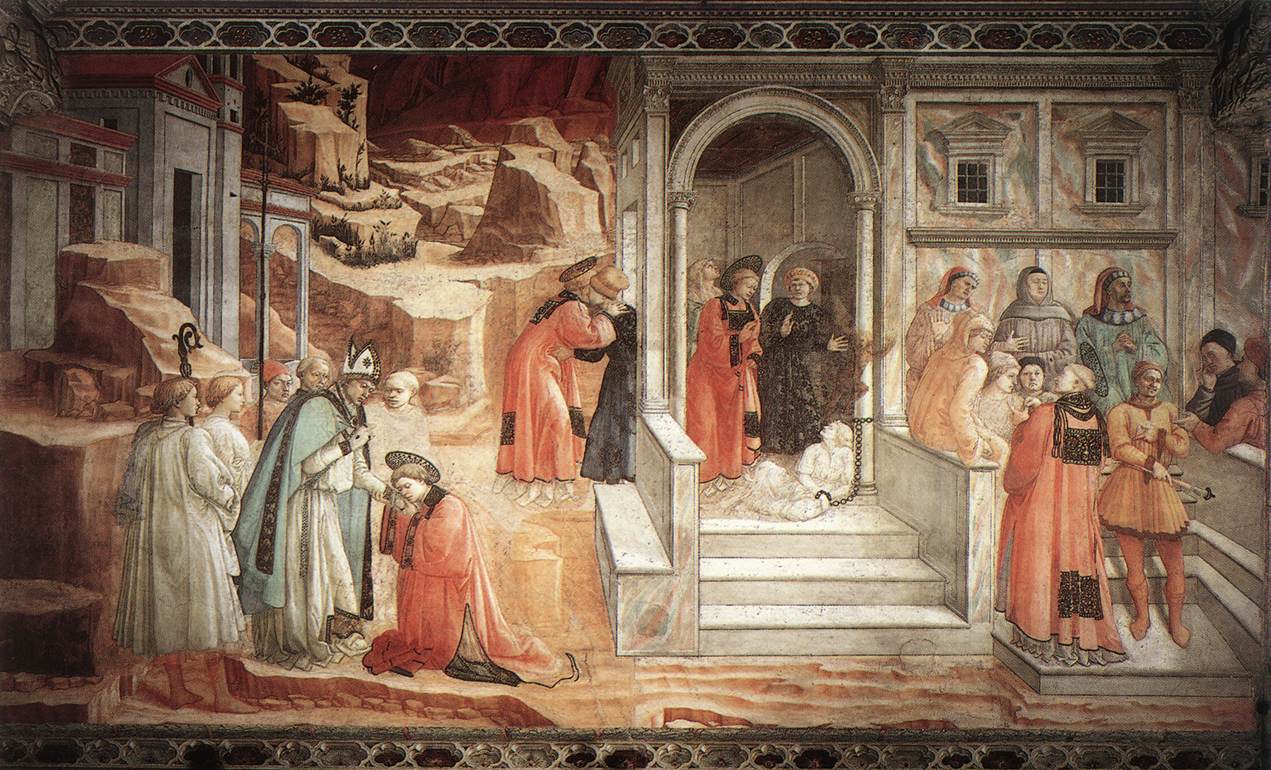
Look Ye Out Among You Seven Men
“And in those days, when the number of the disciples was multiplied, there arose a murmuring of the Grecians against the Hebrews, because their widows were neglected in the daily ministration.”
Acts 6:1
“Among those of the Hebrew faith who were gathered at Jerusalem were some commonly known as Grecians, between whom and the Jews of Palestine there had long existed distrust and even antagonism. … Satan knew that so long as this union continued to exist, he would be powerless to check the progress of gospel truth; and he sought to take advantage of former habits of thought, in the hope that thereby he might be able to introduce into the church elements of disunion.”
Ellen G. White · The Acts of the Apostles, p. 87
This is not the church’s first external attack; it is its first internal one, and it targets an old fault line that predates the gospel itself — a cultural tension between Greek-speaking and Hebrew-speaking Jews that Christ’s own resurrection had not automatically erased.
“The cause of complaint was an alleged neglect of the Greek widows in the daily distribution of assistance. Any inequality would have been contrary to the spirit of the gospel, yet Satan had succeeded in arousing suspicion. Prompt measures must now be taken to remove all occasion for dissatisfaction, lest the enemy triumph in his effort to bring about a division among the believers.”
Ellen G. White · The Acts of the Apostles, p. 88
It is worth noting exactly what kind of problem this is: not a doctrinal dispute, not a moral failure like Ananias and Sapphira’s, but a logistics complaint about widows and daily food — the ordinary, unglamorous friction of a growing organization, and precisely the kind of small grievance Satan knows how to widen into something much bigger if it is left unattended.
“Then the twelve called the multitude of the disciples unto them, and said, It is not reason that we should leave the word of God, and serve tables. Wherefore, brethren, look ye out among you seven men of honest report, full of the Holy Ghost and wisdom, whom we may appoint over this business. But we will give ourselves continually to prayer, and to the ministry of the word.”
Acts 6:2-4
“The church was continually enlarging, and this growth in membership brought increasingly heavy burdens upon those in charge. No one man, or even one set of men, could continue to bear these burdens alone, without imperiling the future prosperity of the church. There was necessity for a further distribution of the responsibilities which had been borne so faithfully by a few during the earlier days of the church.”
Ellen G. White · The Acts of the Apostles, p. 88
The apostles’ solution is not to defend themselves against the complaint or dismiss it as unimportant, but to recognize a genuine structural problem: twelve men were never meant to personally manage every practical detail of a movement now numbering in the thousands. “We will give ourselves continually to prayer, and to the ministry of the word” is not a claim that preaching is more important than feeding widows — it is an honest admission that no one person, however called, can carry every task alone.
Full Of Faith And Of The Holy Ghost
“And the saying pleased the whole multitude: and they chose Stephen, a man full of faith and of the Holy Ghost, and Philip, and Prochorus, and Nicanor, and Timon, and Parmenas, and Nicolas a proselyte of Antioch: Whom they set before the apostles: and when they had prayed, they laid their hands on them.”
Acts 6:5-6
All seven names chosen for this role are Greek names — every single one of them almost certainly from the very group that raised the original complaint. The apostles do not appoint a committee of Hebrew overseers to supervise fair treatment for the Grecian widows; they hand the entire ministry directly to Grecian believers themselves, trusting the wronged party to administer the solution.
“This advice was followed, and by prayer and the laying on of hands, seven chosen men were solemnly set apart for their duties as deacons. … The fact that these brethren had been ordained for the special work of looking after the needs of the poor, did not exclude them from teaching the faith. On the contrary, they were fully qualified to instruct others in the truth, and they engaged in the work with great earnestness and success.”
Ellen G. White · The Acts of the Apostles, p. 89
Serving tables, it turns out, was never meant to be a lesser calling walled off from preaching. Within a few verses this same chapter will show one of these seven table-servers debating the empire’s own religious scholars and losing none of the arguments.
“And the word of God increased; and the number of the disciples multiplied in Jerusalem greatly; and a great company of the priests were obedient to the faith.”
Acts 6:7
“That this step was in the order of God, is revealed in the immediate results for good that were seen. … This ingathering of souls was due both to the greater freedom secured by the apostles and to the zeal and power shown by the seven deacons.”
Ellen G. White · The Acts of the Apostles, p. 89
“A great company of the priests were obedient to the faith” is one of the more startling single sentences in this whole book. The very religious class that arrested Peter and John twice in the previous two chapters is now producing converts of its own — a detail Luke does not dwell on, but does not skip either.
They Were Not Able To Resist
“And Stephen, full of faith and power, did great wonders and miracles among the people. Then there arose certain of the synagogue, which is called the synagogue of the Libertines, and Cyrenians, and Alexandrians, and of them of Cilicia and of Asia, disputing with Stephen.”
Acts 6:8-9
“Stephen, the foremost of the seven deacons, was a man of deep piety and broad faith. Though a Jew by birth, he spoke the Greek language and was familiar with the customs and manners of the Greeks. He therefore found opportunity to preach the gospel in the synagogues of the Greek Jews. He was very active in the cause of Christ and boldly proclaimed his faith. Learned rabbis and doctors of the law engaged in public discussion with him, confidently expecting an easy victory.”
Ellen G. White · The Acts of the Apostles, p. 97
The men who challenge Stephen come from synagogues associated with several different regions across the empire — a coalition of trained debaters assembled specifically because they expect this uneducated table-server to be an easy target. Their confidence is the first sign of how badly they misjudge him.
“And they were not able to resist the wisdom and the spirit by which he spake.”
Acts 6:10
“Not only did he speak in the power of the Holy Spirit, but it was plain that he was a student of the prophecies and learned in all matters of the law. He ably defended the truths that he advocated and utterly defeated his opponents.”
Ellen G. White · The Acts of the Apostles, p. 97
A man chosen originally to distribute food to widows turns out to be as thoroughly prepared in Scripture and prophecy as any rabbi trained his whole life for exactly this kind of debate. His appointment to a “lesser” task clearly never kept him from deep, sustained study of the Word.
“Then they suborned men, which said, We have heard him speak blasphemous words against Moses, and against God. And they stirred up the people, and the elders, and the scribes, and came upon him, and caught him, and brought him to the council.”
Acts 6:11-12
“Because the priests and rulers could not prevail against the clear, calm wisdom of Stephen, they determined to make an example of him; and while thus satisfying their revengeful hatred, they would prevent others, through fear, from adopting his belief. Witnesses were hired to bear false testimony that they had heard him speak blasphemous words against the temple and the law.”
Ellen G. White · The Acts of the Apostles, p. 98
Losing the argument fairly leads directly to winning it unfairly. When Stephen’s opponents cannot out-reason him, their entire strategy shifts from persuasion to manufactured testimony — the same pattern this book has already shown once, at the original trial of Jesus Himself.
“Learned Jews from the surrounding countries were summoned for the purpose of refuting the arguments of the prisoner. Saul of Tarsus was present and took a leading part against Stephen. He brought the weight of eloquence and the logic of the rabbis to bear upon the case, to convince the people that Stephen was preaching delusive and dangerous doctrines; but in Stephen he met one who had a full understanding of the purpose of God in the spreading of the gospel to other nations.”
Ellen G. White · The Acts of the Apostles, p. 98
This is the first appearance in this entire book of a name that will eventually dominate its second half. Saul of Tarsus stands here fully convinced, fully committed, arguing against the very message he will one day give his whole life to proclaim — and whatever Stephen says in the chapter still ahead, Saul is close enough to hear every word of it.
The Face Of An Angel
“And set up false witnesses, which said, This man ceaseth not to speak blasphemous words against this holy place, and the law: For we have heard him say, that this Jesus of Nazareth shall destroy this place, and shall change the customs which Moses delivered us.”
Acts 6:13-14
“‘We have heard him say,’ these witnesses declared, ‘that this Jesus of Nazareth shall destroy this place, and shall change the customs which Moses delivered us.’”
Ellen G. White · The Acts of the Apostles, p. 98
It is the exact charge leveled against Jesus at His own trial, borrowed almost word for word and pointed now at His follower — the accusers apparently unable to invent anything new, simply recycling the same false testimony that worked once before.
“And all that sat in the council, looking stedfastly on him, saw his face as it had been the face of an angel.”
Acts 6:15
“As Stephen stood face to face with his judges to answer to the charge of blasphemy, a holy radiance shone upon his countenance, and ‘all that sat in the council, looking steadfastly on him, saw his face as it had been the face of an angel.’ Many who beheld this light trembled and veiled their faces, but the stubborn unbelief and prejudice of the rulers did not waver.”
Ellen G. White · The Acts of the Apostles, p. 99
Even now, with false charges read aloud and his life plainly in danger, Stephen’s own face gives the entire council its clearest evidence yet — not a defense he has spoken, but a light no one in that room can explain away as coincidence. Some in the room are so unsettled by it that they cannot even hold his gaze. And yet a lit face, however undeniable, has never once been enough by itself to soften a heart that has already decided not to yield; what happens to this radiant, falsely accused man is still, in the very next chapter, about to get much worse before this book moves on.
