This chapter holds two of the most extreme moments in the whole book, one right after the other: a married couple struck dead in front of the whole congregation for a lie about money, and a company of apostles who walk out of a near-death sentence from the nation’s highest court actually rejoicing that they were found worthy to be humiliated for a name. The same young church that could not tolerate a lie among its own members would not, at any price, stop telling the truth to everyone else.
A study in Acts 5 · Arthur Baldwin · StandUp4Jesus.Org · 24 min read
Thou Hast Not Lied Unto Men, But Unto God
“But a certain man named Ananias, with Sapphira his wife, sold a possession, And kept back part of the price, his wife also being privy to it, and brought a certain part, and laid it at the apostles’ feet.”
Acts 5:1-2
“They had been present with other believers when, after the apostles had prayed, ‘the place was shaken where they were assembled together; and they were all filled with the Holy Ghost.’ … Deep conviction had rested upon all present, and under the direct influence of the Spirit of God, Ananias and Sapphira had made a pledge to give to the Lord the proceeds from the sale of certain property.”
Ellen G. White · The Acts of the Apostles, p. 71
This is not a couple who never meant well. Their pledge was made at the very height of the church’s Spirit-filled generosity described at the end of chapter 4, in the same room, under the same conviction that moved Barnabas to sell his own land without reservation.
“Afterward, Ananias and Sapphira grieved the Holy Spirit by yielding to feelings of covetousness. They began to regret their promise… They saw, however, that those who parted with their possessions to supply the needs of their poorer brethren, were held in high esteem among the believers; and ashamed to have their brethren know that their selfish souls grudged that which they had solemnly dedicated to God, they deliberately decided to sell their property and pretend to give all the proceeds into the general fund, but really to keep a large share for themselves.”
Ellen G. White · The Acts of the Apostles, p. 72
Their actual sin is never simply keeping money back — the text makes clear that was always entirely within their right to do. It is the pretense, the deliberate decision to look as generous as Barnabas while quietly keeping the reputation without paying the price.
“But Peter said, Ananias, why hath Satan filled thine heart to lie to the Holy Ghost, and to keep back part of the price of the land? Whiles it remained, was it not thine own? and after it was sold, was it not in thine own power? why hast thou conceived this thing in thine heart? thou hast not lied unto men, but unto God.”
Acts 5:3-4
“‘Whiles it remained, was it not thine own?’ Peter asked. No undue influence had been brought to bear upon Ananias to compel him to sacrifice his possessions to the general good. He had acted from choice. But in attempting to deceive the disciples, he had lied to the Almighty.”
Ellen G. White · The Acts of the Apostles, p. 73
Peter’s own question dismantles any excuse before Ananias can offer one. Nobody forced the sale, nobody demanded the whole price, and nobody would have thought less of him for keeping every coin. The entire tragedy was self-inflicted, over a portion of money he was never obligated to give away in the first place.
“And Ananias hearing these words fell down, and gave up the ghost: and great fear came on all them that heard these things. And the young men arose, wound him up, and carried him out, and buried him.”
Acts 5:5-6
“And it was about the space of three hours after, when his wife, not knowing what was done, came in. And Peter answered unto her, Tell me whether ye sold the land for so much? And she said, Yea, for so much.”
Acts 5:7-8
Three hours pass, and word of her husband’s death has apparently not yet reached her — Peter gives Sapphira the exact same opening he gave Ananias, one more clean chance to simply tell the truth about the sale price. She takes the lie instead, unprompted and unpressured, confirming this was never a moment of panic but a plan the two of them had rehearsed together.
“Then Peter said unto her, How is it that ye have agreed together to tempt the Spirit of the Lord? behold, the feet of them which have buried thy husband are at the door, and shall carry thee out. Then fell she down straightway at his feet, and yielded up the ghost.”
Acts 5:9-10
“Infinite Wisdom saw that this signal manifestation of the wrath of God was necessary to guard the young church from becoming demoralized. Their numbers were rapidly increasing. The church would have been endangered if, in the rapid increase of converts, men and women had been added who, while professing to serve God, were worshiping mammon.”
Ellen G. White · The Acts of the Apostles, p. 73
This judgment falls at the exact moment the church is most vulnerable to exactly this kind of quiet corruption — thousands of new converts joining daily, more than the apostles could possibly vet individually, and a reputation for radical generosity that a hypocrite could easily exploit for status without ever paying its real cost.
“And great fear came upon all the church, and upon as many as heard these things.”
Acts 5:11
This is the first time the word “church” appears in Acts to describe the whole body of believers as a single entity — and it arrives, pointedly, in a sentence about holy fear rather than one about growth or celebration.
The Shadow Of Peter
“And by the hands of the apostles were many signs and wonders wrought among the people; (and they were all with one accord in Solomon’s porch. And of the rest durst no man join himself to them: but the people magnified them. And believers were the more added to the Lord, multitudes both of men and women.)”
Acts 5:12-14
Fear of the church and growth of the church, remarkably, run side by side in these verses. Casual curiosity-seekers are scared off — “of the rest durst no man join himself to them” — while genuine believers keep arriving in multitudes; whatever this new community is, it has stopped being safe to treat lightly.
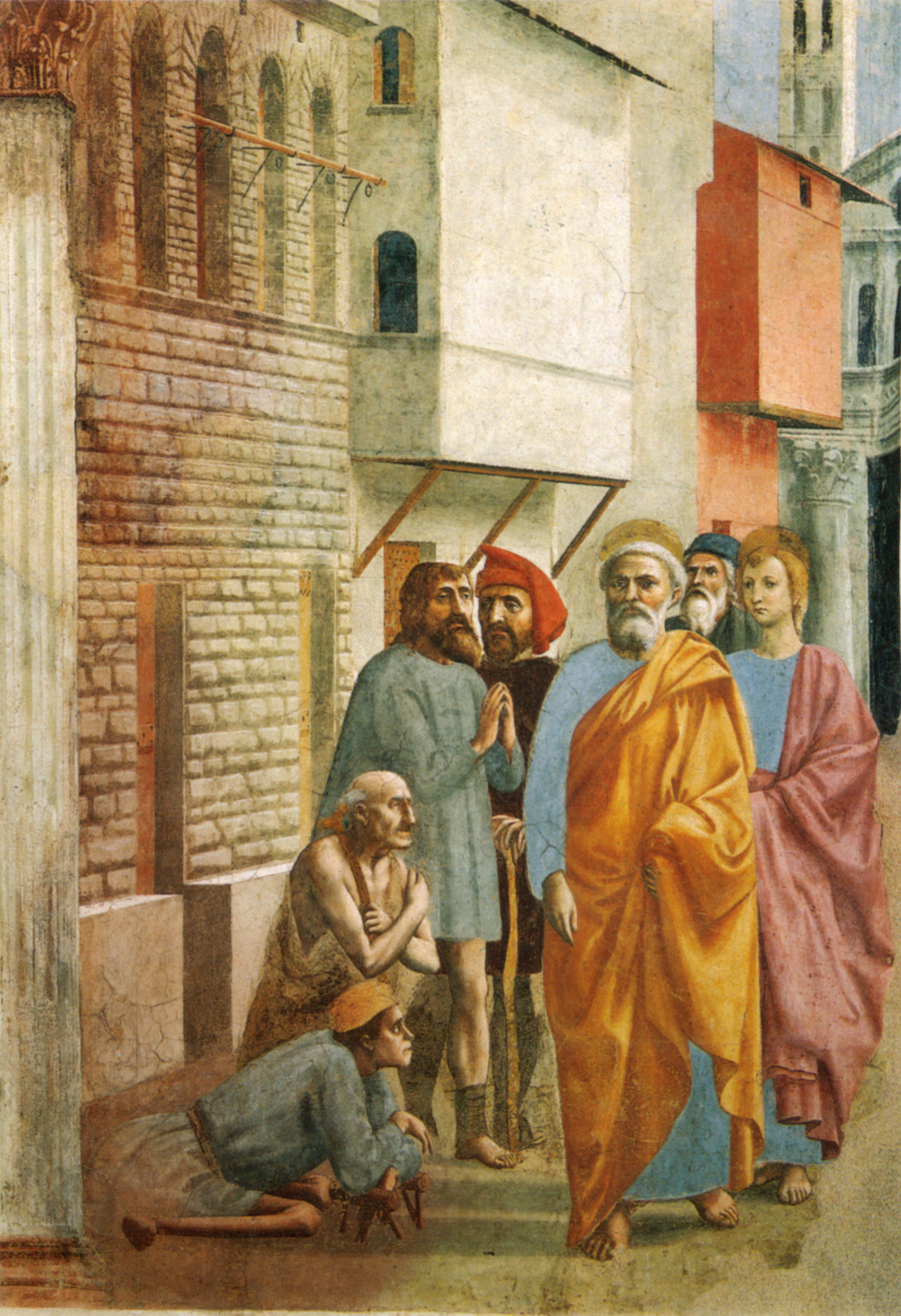
“Insomuch that they brought forth the sick into the streets, and laid them on beds and couches, that at the least the shadow of Peter passing by might overshadow some of them. There came also a multitude out of the cities round about unto Jerusalem, bringing sick folks, and them which were vexed with unclean spirits: and they were healed every one.”
Acts 5:15-16
“The power of the risen Saviour had indeed fallen on the disciples, and their work was accompanied by signs and miracles that daily increased the number of believers. Along the streets where the disciples were to pass, the people laid their sick ‘on beds and couches, that at the least the shadow of Peter passing by might overshadow some of them.’”
Ellen G. White · The Acts of the Apostles, p. 77
Nowhere does the text say Peter’s shadow itself carried any power of its own; the crowds’ own desperate faith reached for whatever proximity to him they could get. It is the same instinct that once made a woman in Galilee try to touch the hem of Christ’s garment — faith grasping for contact, certain that nearness to the source of healing would be enough.
The Angel Of The Lord
“Then the high priest rose up, and all they that were with him, (which is the sect of the Sadducees,) and were filled with indignation, And laid their hands on the apostles, and put them in the common prison.”
Acts 5:17-18
“As the Sadducees, who did not believe in a resurrection, heard the apostles declaring that Christ had risen from the dead, they were enraged, realizing that if the apostles were allowed to preach a risen Saviour, and to work miracles in His name, the doctrine that there would be no resurrection would be rejected by all, and the sect of the Sadducees would soon become extinct.”
Ellen G. White · The Acts of the Apostles, p. 78
This arrest is not simply about public disorder; it is existential for the Sadducees specifically. Every healed cripple and every reported resurrection is a direct threat to the one doctrine that defines their entire religious party.
“But the angel of the Lord by night opened the prison doors, and brought them forth, and said, Go, stand and speak in the temple to the people all the words of this life.”
Acts 5:19-20
“By night the angel of the Lord opened the prison doors and said to the disciples, ‘Go, stand and speak in the temple to the people all the words of this life.’ This command was directly contrary to the order given by the Jewish rulers; but did the apostles say, We cannot do this until we have consulted the magistrates and received permission from them? No; God had said, ‘Go,’ and they obeyed.”
Ellen G. White · The Acts of the Apostles, p. 79
The miracle is not simply an escape; it is a reassignment. The angel does not tell the apostles to flee the city or go into hiding — he sends them straight back to the exact temple courts where their arrest happened, to keep doing the very thing that landed them in prison the night before.
“And when they heard that, they entered into the temple early in the morning, and taught. But the high priest came, and they that were with him, and called the council together, and all the senate of the children of Israel, and sent to the prison to have them brought. But when the officers came, and found them not in the prison, they returned, and told, Saying, The prison truly found we shut with all safety, and the keepers standing without before the doors: but when we had opened, we found no man within.”
Acts 5:21-23
Locked doors, posted guards, and an entirely empty cell — the officers’ own report is a small, almost comic inventory of a security system that worked perfectly at every point except the one that mattered.
“Then came one and told them, saying, Behold, the men whom ye put in prison are standing in the temple, and teaching the people. Then went the captain with the officers, and brought them without violence: for they feared the people, lest they should have been stoned.”
Acts 5:25-26
For a second time in this book, the very crowd that once turned on Jesus is now standing between His apostles and the men who mean to harm them — the arresting officers themselves reduced to tiptoeing carefully around a mob they are afraid of provoking.
We Ought To Obey God Rather Than Men
“And when they had brought them, they set them before the council: and the high priest asked them, Saying, Did not we straitly command you that ye should not teach in this name? and, behold, ye have filled Jerusalem with your doctrine, and intend to bring this man’s blood upon us.”
Acts 5:27-28
The high priest’s own words are a confession he never intends as one — “bring this Man’s blood upon us” betrays exactly what he is truly afraid of: not disorder, but guilt he cannot outrun.
“Then Peter and the other apostles answered and said, We ought to obey God rather than men. The God of our fathers raised up Jesus, whom ye slew and hanged on a tree.”
Acts 5:29-30
“As they stood for the second time before the men who seemed bent on their destruction, no fear or hesitation could be discerned in their words or attitude. And when the high priest said, ‘Did we not straitly command you that ye should not teach in this name? … and intend to bring this Man’s blood upon us,’ Peter answered, ‘We ought to obey God rather than men.’”
Ellen G. White · The Acts of the Apostles, p. 81
Five words settle the whole argument before it starts. This is not the same as lawless defiance of every human authority; Peter is not refusing taxes or civic order. It is a principle with one very specific, very narrow application: when a human command directly contradicts a direct word from God, the human command loses.
“Him hath God exalted with his right hand to be a Prince and a Saviour, for to give repentance to Israel, and forgiveness of sins. And we are his witnesses of these things; and so is also the Holy Ghost, whom God hath given to them that obey him.”
Acts 5:31-32
Peter’s title for Christ here — “a Prince and a Saviour” — deliberately pairs authority with rescue, echoing “the Prince of life” he had already named back in chapter 3. He is telling the very council that killed Jesus that the Man they executed now outranks every one of them.
“When they heard that, they were cut to the heart, and took counsel to slay them.”
Acts 5:33
“So enraged were the Jews at these words that they decided to take the law into their own hands and without further trial, or without authority from the Roman officers, to put the prisoners to death. Already guilty of the blood of Christ, they were now eager to stain their hands with the blood of His disciples.”
Ellen G. White · The Acts of the Apostles, p. 82
This is the closest the apostles have come to death since the resurrection, and it is happening in a matter of seconds, inside a room with no crowd left outside to restrain anyone.
Rejoicing That They Were Counted Worthy
“Then stood there up one in the council, a Pharisee, named Gamaliel, a doctor of the law, had in reputation among all the people, and commanded to put the apostles forth a little space.”
Acts 5:34
“But in the council there was one man who recognized the voice of God in the words spoken by the disciples. This was Gamaliel, a Pharisee of good reputation and a man of learning and high position. His clear intellect saw that the violent step contemplated by the priests would lead to terrible consequences.”
Ellen G. White · The Acts of the Apostles, p. 82
A single respected voice, at the exact moment the council is closest to real bloodshed, is enough to change the whole room’s direction — a reminder of how much power one clear-headed person can carry in a crowd that has otherwise lost itself to rage.
“For before these days rose up Theudas, boasting himself to be somebody; to whom a number of men, about four hundred, joined themselves: who was slain; and all, as many as obeyed him, were scattered, and brought to nought. After this man rose up Judas of Galilee in the days of the taxing, and drew away much people after him: he also perished; and all, even as many as obeyed him, were dispersed.”
Acts 5:36-37
“And now I say unto you, Refrain from these men, and let them alone: for if this counsel or this work be of men, it will come to nought: But if it be of God, ye cannot overthrow it; lest haply ye be found even to fight against God.”
Acts 5:38-39
“The priests saw the reasonableness of these views, and were obliged to agree with Gamaliel. Yet their prejudice and hatred could hardly be restrained.”
Ellen G. White · The Acts of the Apostles, p. 83
Gamaliel’s own logic is genuinely sound as far as it goes, and history would go on to prove him more right than he could have known — but it is worth noticing that his counsel is built on patience and caution, not on conviction. He is not defending Christ; he is simply unwilling to bet his own hands on being wrong.
“And to him they agreed: and when they had called the apostles, and beaten them, they commanded that they should not speak in the name of Jesus, and let them go.”
Acts 5:40
“And they departed from the presence of the council, rejoicing that they were counted worthy to suffer shame for his name.”
Acts 5:41
“Very reluctantly, after beating the disciples and charging them again at the peril of their lives to preach no more in the name of Jesus, they released them. ‘And they departed from the presence of the council, rejoicing that they were counted worthy to suffer shame for His name.’”
Ellen G. White · The Acts of the Apostles, p. 83
A public beating, delivered by the same council that had just been talking about killing them outright minutes earlier, becomes the occasion for joy rather than despair. This is not stoicism gritting its teeth through pain; it is genuine gladness that they were considered significant enough, and faithful enough, for Christ’s name to be worth suffering for.
“And daily in the temple, and in every house, they ceased not to teach and preach Jesus Christ.”
Acts 5:42
The chapter that opened with two believers struck dead for a private lie closes with the apostles preaching Christ openly, in public and in private, every single day, without pause. The very threat meant to silence this movement for good has produced, instead of silence, a church that simply will not stop talking.
