Twelve chapters into this book, the church has grown from a hundred and twenty in an upper room to communities scattered across Judea, Samaria, and now a great pleasure city called Antioch. This chapter is where it stops merely surviving persecution and starts, deliberately, sending itself outward — the first organized missionary journey in Christian history, launched by two men the church itself lays hands on and lets go.
A study in Acts 13 · Arthur Baldwin · StandUp4Jesus.Org · 22 min read
Separate Me Barnabas And Saul
“Now there were in the church that was at Antioch certain prophets and teachers; as Barnabas, and Simeon that was called Niger, and Lucius of Cyrene, and Manaen, which had been brought up with Herod the tetrarch, and Saul. As they ministered to the Lord, and fasted, the Holy Ghost said, Separate me Barnabas and Saul for the work whereunto I have called them.”
Acts 13:1-2
“Both Paul and Barnabas had already received their commission from God Himself, and the ceremony of the laying on of hands added no new grace or virtual qualification. It was an acknowledged form of designation to an appointed office and a recognition of one’s authority in that office. By it the seal of the church was set upon the work of God.”
Ellen G. White · The Acts of the Apostles, p. 161
God had already called both men individually, years apart, in unmistakable ways — Paul on the Damascus road, Barnabas through years of quiet, trusted service. This public ordination adds nothing to that calling; it simply lets the whole church see and confirm publicly what God had already decided privately.
“And when they had fasted and prayed, and laid their hands on them, they sent them away. So they, being sent forth by the Holy Ghost, departed unto Seleucia; and from thence they sailed to Cyprus.”
Acts 13:3-4
Luke’s own phrasing is worth noticing: the church lays hands on them and sends them out, but the sentence immediately corrects itself — they were, in fact, sent by the Holy Ghost. The church confirms the commission; it does not originate it.
“And when they were at Salamis, they preached the word of God in the synagogues of the Jews: and they had also John to their minister.”
Acts 13:5
“It was during one of these visits of the apostles to his mother’s home, that Mark proposed to Paul and Barnabas that he should accompany them on their missionary tour. He felt the favor of God in his heart and longed to devote himself entirely to the work of the gospel ministry.”
Ellen G. White · The Acts of the Apostles, p. 166
John Mark joins this journey full of genuine, eager devotion — a detail worth remembering for how differently this same young man will act only a few verses from now.
Elymas The Sorcerer
“And when they had gone through the isle unto Paphos, they found a certain sorcerer, a false prophet, a Jew, whose name was Bar-jesus: Which was with the deputy of the country, Sergius Paulus, a prudent man; who called for Barnabas and Saul, and desired to hear the word of God.”
Acts 13:6-7
“Not without a struggle does Satan allow the kingdom of God to be built up in the earth. The forces of evil are engaged in unceasing warfare against the agencies appointed for the spread of the gospel, and these powers of darkness are especially active when the truth is proclaimed before men of repute and sterling integrity.”
Ellen G. White · The Acts of the Apostles, p. 167
Sergius Paulus is not an ordinary bystander but the Roman governor of the whole island, actively seeking out the gospel on his own initiative. His genuine interest is exactly what draws the strongest resistance Paul has yet faced on this journey.
“But Elymas the sorcerer (for so is his name by interpretation) withstood them, seeking to turn away the deputy from the faith. Then Saul, (who also is called Paul,) filled with the Holy Ghost, set his eyes on him, And said, O full of all subtilty and all mischief, thou child of the devil, thou enemy of all righteousness, wilt thou not cease to pervert the right ways of the Lord?”
Acts 13:8-10
This is the exact moment Luke switches, permanently, from calling him Saul to calling him Paul — not at his conversion, not at his ordination, but here, at the first recorded confrontation of his new missionary career. The old name belongs to the persecutor; the new one belongs to the man about to spend the rest of this book carrying the gospel to the Gentile world.
“And now, behold, the hand of the Lord is upon thee, and thou shalt be blind, not seeing the sun for a season. And immediately there fell on him a mist and a darkness; and he went about seeking some to lead him by the hand. Then the deputy, when he saw what was done, believed, being astonished at the doctrine of the Lord.”
Acts 13:11-12
“The sorcerer had closed his eyes to the evidences of gospel truth, and the Lord, in righteous anger, caused his natural eyes to be closed, shutting out from him the light of day. This blindness was not permanent, but only for a season, that he might be warned to repent and seek pardon of the God whom he had so grievously offended.”
Ellen G. White · The Acts of the Apostles, p. 168
The punishment fits the sin with an almost poetic exactness: a man who has spent his whole life working to keep others blind to the truth is himself, for a season, made physically blind — the same judgment, and the same limited mercy, this book already showed Saul himself receiving back on the Damascus road.
Men Of Israel, And Ye That Fear God
“Now when Paul and his company loosed from Paphos, they came to Perga in Pamphylia: and John departing from them returned to Jerusalem.”
Acts 13:13
“Unused to hardships, he was disheartened by the perils and privations of the way. He had labored with success under favorable circumstances; but now, amidst the opposition and perils that so often beset the pioneer worker, he failed to endure hardness as a good soldier of the cross.”
Ellen G. White · The Acts of the Apostles, p. 169
The same young man who begged to come on this journey, full of eager devotion back in Antioch, is the first one to turn back once it actually gets difficult. A desire to serve and the endurance to keep serving, this book quietly demonstrates, are not always the same gift.
“But when they departed from Perga, they came to Antioch in Pisidia, and went into the synagogue on the sabbath day, and sat down. And after the reading of the law and the prophets the rulers of the synagogue sent unto them, saying, Ye men and brethren, if ye have any word of exhortation for the people, say on.”
Acts 13:14-15
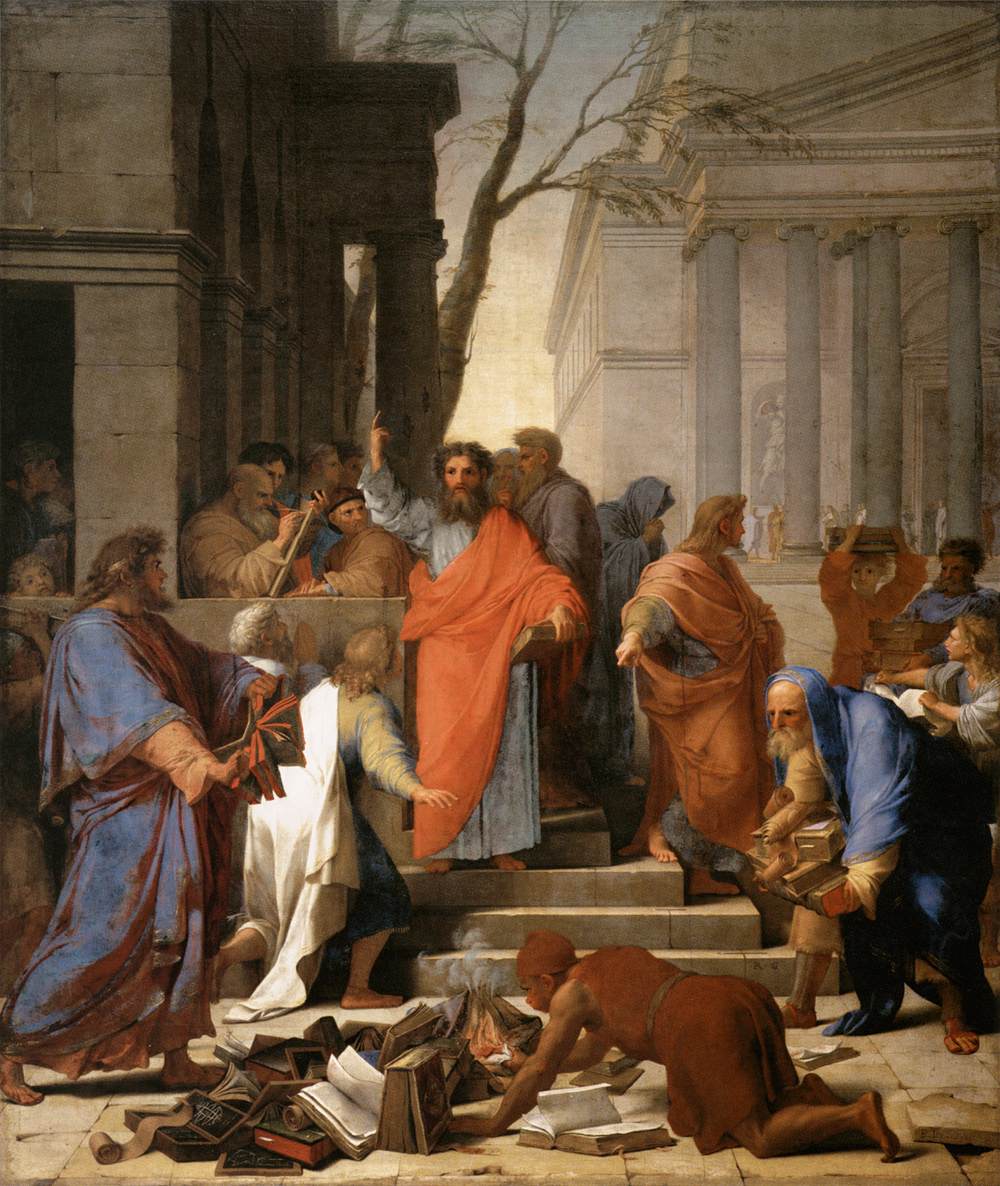
“Then Paul stood up, and beckoning with his hand said, Men of Israel, and ye that fear God, give audience. The God of this people of Israel chose our fathers, and exalted the people when they dwelt as strangers in the land of Egypt, and with an high arm brought he them out of it.”
Acts 13:16-17
“He proceeded to give a history of the manner in which the Lord had dealt with the Jews from the time of their deliverance from Egyptian bondage, and how a Saviour had been promised, of the seed of David.”
Ellen G. White · The Acts of the Apostles, p. 170
An invitation offered casually to any visiting Jewish teacher becomes, in Paul’s hands, this book’s first fully recorded sermon — the same rhetorical strategy Stephen once used before this same nation’s highest court, tracing Israel’s own history toward its true destination.
“And afterward they desired a king: and God gave unto them Saul the son of Cis, a man of the tribe of Benjamin, by the space of forty years. And when he had removed him, he raised up unto them David to be their king; to whom also he gave testimony, and said, I have found David the son of Jesse, a man after mine own heart, which shall fulfil all my will.”
Acts 13:21-22
Paul, formerly named for Israel’s first king, cannot resist mentioning that very king by name on his way to David — the man “removed” for disobedience, standing in quiet contrast to the man “after mine own heart” whose seed is the whole point of the sermon.
“Of this man’s seed hath God according to his promise raised unto Israel a Saviour, Jesus: When John had first preached before his coming the baptism of repentance to all the people of Israel.”
Acts 13:23-24
“And as John fulfilled his course, he said, Whom think ye that I am? I am not he. But, behold, there cometh one after me, whose shoes of his feet I am not worthy to loose.”
Acts 13:25
Paul reaches for the one recent witness this audience would already know and trust — John the Baptist’s own public humility, freely admitting he was not the One they were waiting for, making room for exactly the announcement Paul is about to deliver.
The Forgiveness Of Sins
“Men and brethren, children of the stock of Abraham, and whosoever among you feareth God, to you is the word of this salvation sent. For they that dwell at Jerusalem, and their rulers, because they knew him not, nor yet the voices of the prophets which are read every sabbath day, they have fulfilled them in condemning him.”
Acts 13:26-27
“Paul did not hesitate to speak the plain truth concerning the rejection of the Saviour by the Jewish leaders.”
Ellen G. White · The Acts of the Apostles, p. 171
Ignorance, again, is not offered here as an excuse but as an explanation — the very leaders who read these prophecies aloud every single Sabbath somehow failed to recognize their fulfillment standing right in front of them.
“And though they found no cause of death in him, yet desired they Pilate that he should be slain. And when they had fulfilled all that was written of him, they took him down from the tree, and laid him in a sepulchre. But God raised him from the dead.”
Acts 13:28-30
“And he was seen many days of them which came up with him from Galilee to Jerusalem, who are his witnesses unto the people.”
Acts 13:31
“And we declare unto you glad tidings, how that the promise which was made unto the fathers, God hath fulfilled the same unto us their children, in that he hath raised up Jesus again; as it is also written in the second psalm, Thou art my Son, this day have I begotten thee.”
Acts 13:32-33
“For David, after he had served his own generation by the will of God, fell on sleep, and was laid unto his fathers, and saw corruption: But he, whom God raised again, saw no corruption.”
Acts 13:36-37
Paul’s argument here is nearly identical to Peter’s own at Pentecost — David’s own tomb, still occupied, proves the resurrection psalms could not have been about David himself. It is worth noticing how consistently every major sermon in this book, whether from Peter or Paul, keeps returning to this same unshakable proof.
“Be it known unto you therefore, men and brethren, that through this man is preached unto you the forgiveness of sins: And by him all that believe are justified from all things, from which ye could not be justified by the law of Moses.”
Acts 13:38-39
“And now, having spoken plainly of the fulfillment of familiar prophecies concerning the Messiah, Paul preached unto them repentance and the remission of sin through the merits of Jesus their Saviour.”
Ellen G. White · The Acts of the Apostles, p. 172
This is the very doctrine that will define the rest of Paul’s whole ministry and letters, spoken here for the first time in this book’s own record — justification by faith in Christ, reaching further than the law of Moses ever could on its own.
“Beware therefore, lest that come upon you, which is spoken of in the prophets; Behold, ye despisers, and wonder, and perish: for I work a work in your days, a work which ye shall in no wise believe, though a man declare it unto you.”
Acts 13:40-41
Paul ends not with comfort but with warning — a sermon that opened by tracing centuries of God’s faithfulness to Israel closes by cautioning this very congregation not to repeat their fathers’ own worst mistake.
We Turn To The Gentiles
“And when the Jews were gone out of the synagogue, the Gentiles besought that these words might be preached to them the next sabbath. … And the next sabbath day came almost the whole city together to hear the word of God.”
Acts 13:42, 44
“The interest aroused in Antioch of Pisidia by Paul’s discourse brought together on the next Sabbath day, ‘almost the whole city … to hear the word of God.’”
Ellen G. White · The Acts of the Apostles, p. 173
One sermon, delivered to a single synagogue on a single Sabbath, has by the following week drawn nearly an entire Gentile city out to hear it repeated — the kind of overnight interest that turns out to be exactly what provokes the crisis still ahead.
“But when the Jews saw the multitudes, they were filled with envy, and spake against those things which were spoken by Paul, contradicting and blaspheming.”
Acts 13:45
“Then Paul and Barnabas waxed bold, and said, It was necessary that the word of God should first have been spoken to you: but seeing ye put it from you, and judge yourselves unworthy of everlasting life, lo, we turn to the Gentiles.”
Acts 13:46
“For so hath the Lord commanded us, saying, I have set thee to be a light of the Gentiles, that thou shouldest be for salvation unto the ends of the earth.”
Acts 13:47
“We turn to the Gentiles” is not a decision Paul and Barnabas simply improvise in a moment of frustration. It is offered here as obedience to a specific prophecy already spoken over them, a command rather than a fallback — and it is the sentence that will define the strategy of the rest of this entire book.
“And when the Gentiles heard this, they were glad, and glorified the word of the Lord: and as many as were ordained to eternal life believed. And the word of the Lord was published throughout all the region.”
Acts 13:48-49
“But the Jews stirred up the devout and honourable women, and the chief men of the city, and raised persecution against Paul and Barnabas, and expelled them out of their coasts. But they shook off the dust of their feet against them, and came unto Iconium.”
Acts 13:50-51
“The apostles were not discouraged by this treatment; they remembered the words of their Master: ‘Blessed are ye, when men shall revile you, and persecute you, and shall say all manner of evil against you falsely, for My sake. Rejoice, and be exceeding glad: for great is your reward in heaven: for so persecuted they the prophets which were before you.’”
Ellen G. White · The Acts of the Apostles, p. 176
“And the disciples were filled with joy, and with the Holy Ghost.”
Acts 13:52
Paul and Barnabas are driven out of an entire district by influential citizens turned against them, and the chapter’s own final sentence, describing the believers left behind, is not fear but joy. Persecution succeeds in removing the missionaries from the city; it fails completely at removing what they left there.
